Tagine in Chefchaouen: Dishes, Ingredients and Dining Tips
Published · Updated
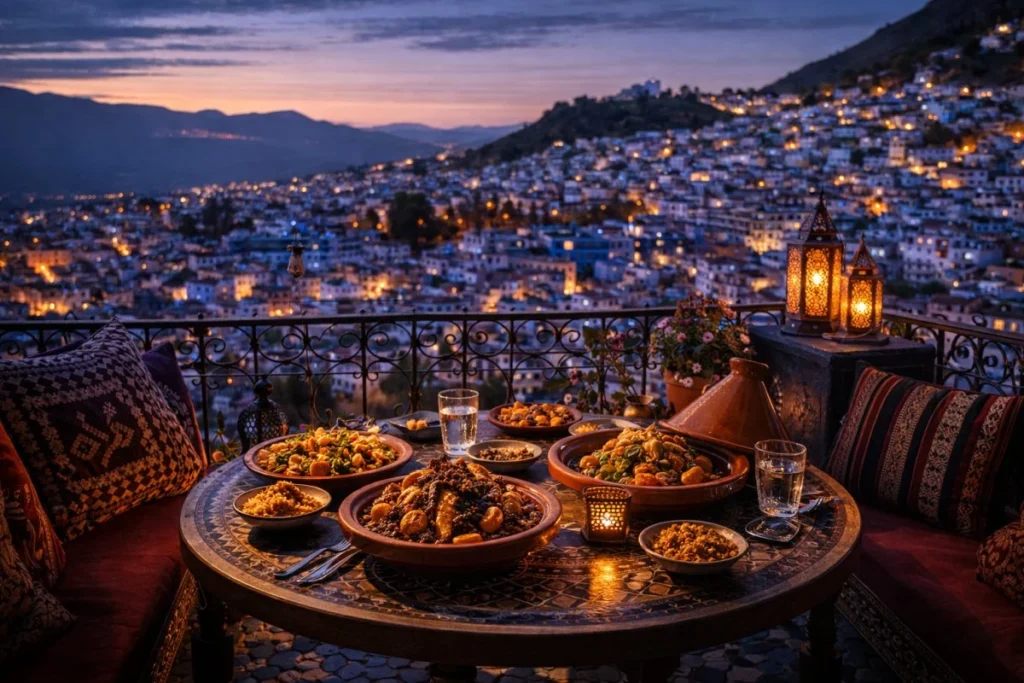
A tagine is a familiar name on a Moroccan menu, but it is not one fixed recipe. For a visitor to Chefchaouen, the useful questions are which version a kitchen prepares, what is included and how it fits the meal you want.
There is no need to order the largest selection or follow a rigid dining ritual. A little information before ordering makes it easier to enjoy the food without relying on a photograph or an old menu to tell you what will arrive.
One name, different dishes
The Moroccan National Tourist Office’s food guide describes tajine as a dish with multiple versions, including fish, chicken, meat and vegetables, sometimes with nuts or fruit. The menu name therefore needs the rest of its description: the main ingredient, sauce, additions and serving arrangement.
The same word is also used for the distinctive lidded cooking vessel. Seeing a tagine-shaped serving dish does not, however, tell you every detail of how that particular meal was prepared. If cooking method matters to your interest, ask the kitchen rather than assuming the presentation answers the question.
Two combinations to recognise
Chicken with preserved lemon and olives
Preserved lemon, olives and chicken form a useful combination to recognise on a menu. Taste of Maroc’s published preparation includes a reduced onion sauce called daghmira. It is one documented version, not a rule for every kitchen. Ask whether the menu’s version includes that sauce and what accompanies the chicken.
Fish with chermoula and vegetables
The publisher’s fish tagine recipe combines fish, chermoula and vegetables, with preserved lemon and olives among its flavourings. If a kitchen offers something similar, ask which fish is being used and how the portion is served. A published recipe is a way to understand the combination, not evidence that a particular Chefchaouen restaurant has it today.
Read a menu by ingredients, not superlatives
A useful choice begins with what you feel like eating. Ask whether the menu’s chicken, meat, fish or vegetable option is available and what accompanies it. Descriptions such as “traditional”, “special” or “house style” may invite a question, but do not establish a particular recipe by themselves.
You do not have to find a supposedly unique mountain version to enjoy a meal in Chefchaouen. This guide makes no claim that every restaurant uses the same local produce, spice mixture or cooking time, and does not rank kitchens it has not assessed.
| Before ordering | Clarify |
|---|---|
| Choose the main ingredient | Which of the listed versions is being served today? |
| Check additions | What sauce, fruit, nuts, eggs or other ingredients are included in this preparation? |
| Understand the portion | Is the order intended for one person or for sharing? |
| Plan the whole meal | Are bread, sides or drinks included, or ordered separately? |
| Allow enough time | What preparation or service time should you expect for today’s order? |
Vegetable does not answer every dietary question
If you need a vegetarian or otherwise restricted meal, describe the requirement clearly and ask about the actual ingredients, including the cooking liquid and additions. A general food guide cannot certify a kitchen’s recipe or handling.
The tourist office’s examples include nuts and different kinds of protein. They are illustrations of variety, not a complete ingredient list for any restaurant. If an ingredient must be avoided, settle that before ordering rather than relying on the colour of a sauce or a dish name.
Sharing and eating comfortably
Ask how the serving is intended to be shared and request plates or utensils as needed. Do not assume that a fork is forbidden, that everyone must eat from one vessel, or that a companion is comfortable with an arrangement because it appears in a travel story.
If bread is offered, ask whether you would like it and whether more is available. Agree additional orders clearly. Respectful dining does not require performing an imagined set of rules; it starts with considerate conversation with your companions and the people serving you.
Choose a place with current information
The existing Chefchaouen restaurant guide is a starting point for finding businesses to research. Confirm the current menu, service and any reservation arrangements directly, especially before making a special journey for a particular dish. No restaurant recommendation in this article guarantees availability.
If you are arriving from elsewhere, keep the meal plan flexible until your transport is settled. The Tangier journey guide helps frame the travel arrangements, but does not reserve a table or establish today’s restaurant hours.
Returning to an entire-house base
Casa Olea Vista offers an entire guest house with two bedrooms and space for up to seven guests. You can see the spaces in the property gallery and discuss dates through Location & Contact. Meals and restaurant services are separate from the house information described here; stay availability and pricing require host confirmation.
Whether you choose tagine or another dish, make the order fit your party and the day. Current information from the kitchen is more useful than a promised price, a supposedly compulsory etiquette rule or a claim that one meal defines every visit.
A LITTLE MORE TO DISCOVER
Keep exploring.
Food & culture
Where to Eat in Chefchaouen: A Carefully Checked Shortlist
Explore a checked Chefchaouen restaurant shortlist and an Akchour dining option, with sources and practical questions about menus, access and timing.
Read the guide — Where to Eat in Chefchaouen: A Carefully Checked ShortlistFood & culture
Bissara in Chefchaouen: A Guide to the Dish and Ordering
Bissara is a useful dish to know when exploring Moroccan food in Chefchaouen. You may also see the spelling bessara. Rather than searching for an allegedly “best” bowl,…
Read the guide — Bissara in Chefchaouen: A Guide to the Dish and Ordering